

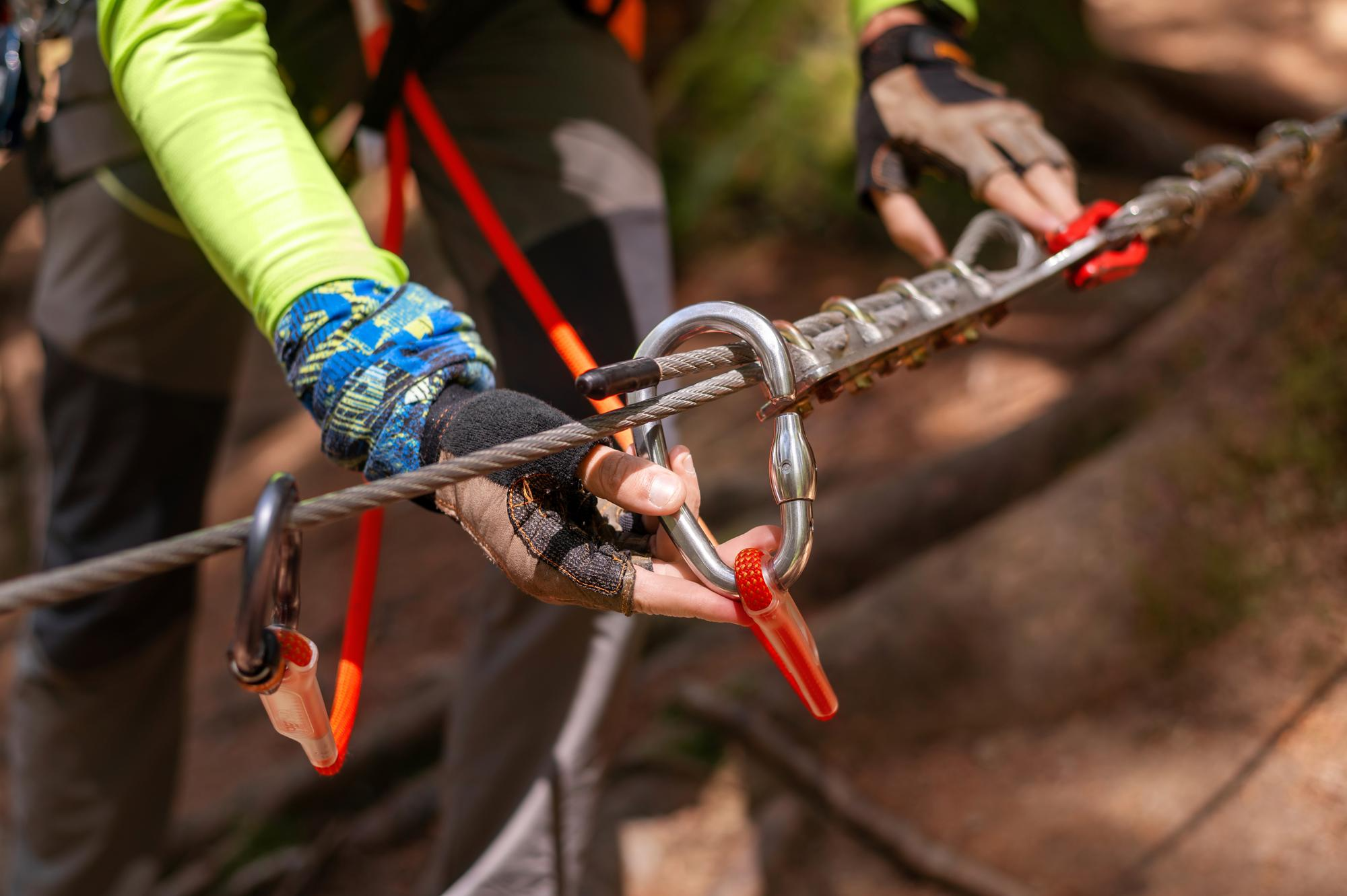
A ropes course is an amazing outdoor activity featuring a series of obstacles like rope bridges, cargo nets, and zip lines. These are usually suspended between trees or utility poles to build teamwork and physical coordination.
The activities include swinging, climbing, and moving across high platforms. While the activity looks thrilling, things could take an ugly turn if you compromise your safety. A rope course harness plays a crucial role here as it holds your body firmly and provides extraordinary stability when you move through those obstacles.
In today’s article, we’ll talk about why it’s important and what its different types are. Let’s get started.
Role of a Ropes Course Harness
So, a ropes course harness works as a primary safety link between your body and the overhead protection system. It safely arrests and stops a fall from height by catching the body.
It also spreads the physical shock of a fall across strong anatomical areas like the thighs, hips, and waist instead of a single point. It will also keep the user upright and stable when hanging or resting mid-air on obstacles.
Lastly, it will provide secure hard points to clip lanyards, safety lines, and continuous belay systems. In short, it will add much-needed layers of security around your body when you need them the most.
Safety and Confidence While Moving at Heights
Confidence is needed when doing those challenges, and harnesses build that instantly. Many people feel nervous when they are high above the ground. This is especially true if they’re doing it for the first time. But when they use a harness, they’ll feel a strong sense of security, which helps them perform the activity more smoothly.
This sense of confidence encourages participants to try even more challenging obstacles. They don’t hold back; instead, they concentrate on improving their balance. This ultimately leads to a greater enjoyment of the activity.
Even the safety instructors rely on these harnesses to train the participants.
Types of Ropes Course Harness
It comes in several types. In a full-body harness, people stay upright. It stops them from flipping over and is great for kids and high ropes.
We then have a sit harness that fits around the waist and legs. It is best for low ropes or general climbing with adult control.
Lastly, the adaptive harness features a padded seat and extra back support. It is perfect for users with any sort of physical challenge.
Which types you should use can only be determined by an expert. They’ll check your body’s unique dynamics and the challenges you’re going to take on.
Choosing and Wearing the Right Harness
It’s important that the harness is perfectly fitted because if it’s too loose, it may compromise stability. And if it’s too tight, you may feel uncomfortable during the movement. So, proper adjustments must be made before you start the challenge.
Harnesses should also be made from strong, durable materials to withstand pressure. If you’re buying on your own, consider a reputable brand so the piece keeps you safe through thick and thin.